Our interactive site needs JavaScript enabled. Here's where to go in the meantime.
How leadership teams turn connected systems into faster, better calls.
Company
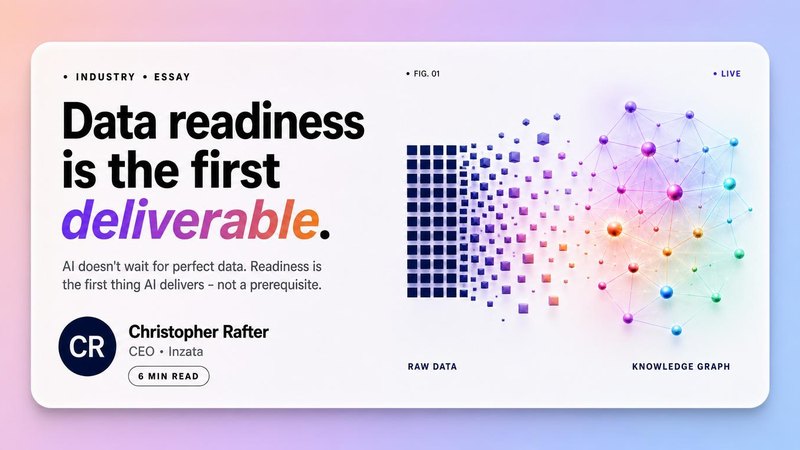
A CIO's playbook for jump-starting AI in a single quarter. Stop treating data readiness as the prerequisite. Make it the first thing AI delivers, and turn it into a compounding asset.
Christopher Rafter · Jul 15, 2026
Sisense embeds analytics inside products and apps. SIGNLD is a decision layer over the systems a company runs, returning evidenced answers, not charts.
Power BI reports what happened once somebody models the data. SIGNLD is a decision intelligence platform that recommends what to do next, traceable to source.
Domo renders your data into cards someone has to build and read. SIGNLD reasons over it and hands back a Decision Brief with a recommended action.
Notion AI answers from the wiki your team wrote by hand. SIGNLD answers company knowledge from the systems where the numbers actually change, day to day.
Tableau shows you the chart moving. SIGNLD is a decision intelligence platform that traces why the number moved and what to do about it, evidenced to source.
Eleven business knowledge graph platforms ranked for a company of 10 to 500 people with no data team: what each one needs from you, and where each fits.
Microsoft 365 Copilot summarises the Outlook thread and the Teams call. SIGNLD adds business context: invoices, tickets, and CRM records reconciled together.
AtScale governs one semantic model over a warehouse so BI tools agree. SIGNLD builds a business knowledge graph and answers across the systems nobody loaded.
RelationalAI runs graph reasoning inside Snowflake once a team models it. SIGNLD builds the knowledge graph itself and returns the answer, no modelling step.
The dbt Semantic Layer defines metrics in YAML on models you already built. SIGNLD is a decision intelligence layer that answers questions never modelled.
Stardog gives knowledge engineers an RDF graph and SPARQL to query it. SIGNLD builds the business knowledge graph itself and hands back a traceable answer.
ThoughtSpot searches a warehouse model somebody joined by hand. SIGNLD reasons over a semantic model it builds itself, across every connected system.
LookML keeps the definition of revenue in a file an analytics engineer maintains. SIGNLD resolves that semantic layer from connected systems, with no modelling.
Snowflake semantic views model the data already sitting in Snowflake. SIGNLD connects 800+ systems read-only and answers without a warehouse or modelling.
Glean searches and summarises the documents and messages in your workplace apps. SIGNLD resolves business knowledge into numbers traceable back to the source.
Neo4j gives developers a graph database to build on. SIGNLD hands a CFO a finished business knowledge graph, with an evidenced answer in minutes, not a project.
Microsoft Fabric unifies storage and compute in OneLake. SIGNLD resolves entities across systems into a knowledge graph, with no lakehouse and no migration.
Unity Catalog governs tables, columns, and lineage. SIGNLD's Knowledge Graph models entities and relationships, then answers questions directly.
Palantir Foundry builds an enterprise ontology you staff a team to maintain. SIGNLD ships a knowledge graph you buy, connect read-only, and query in minutes.
A plain-English explanation for SMB owners interested in AI. Practical examples across field service, restaurants, and dental. Includes example questions.
Property Managers track net operating income per property manually today by stitching AppFolio and QuickBooks in spreadsheets. SIGNLD connects both.
A plain-English explanation for business owners using reports today. The gap between a report and a decision. Includes example questions and how.
A plain-English explanation for business owners concerned about AI accuracy. Every answer traced back to the source record explained. Includes example.
Toast tracks sales and clock-in hours. It cannot show labor cost versus revenue by daypart without burdened payroll. SIGNLD connects both.