Our interactive site needs JavaScript enabled. Here's where to go in the meantime.
How leadership teams turn connected systems into faster, better calls.
Company
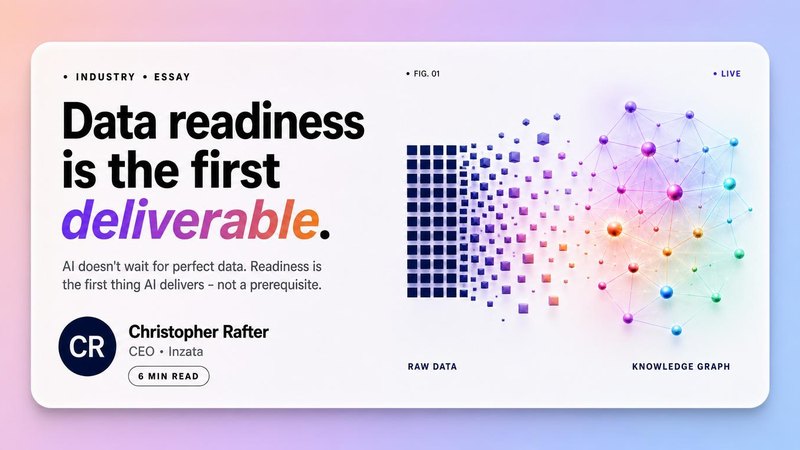
A CIO's playbook for jump-starting AI in a single quarter. Stop treating data readiness as the prerequisite. Make it the first thing AI delivers, and turn it into a compounding asset.
Christopher Rafter · Jul 15, 2026
Measuring the value a team gets from AI sessions means reading sentiment alongside activity, not counting tokens or sessions alone. Here is how it works.
A knowledge graph for business links entities and relationships across systems directly, answering cross-system questions without a warehouse project.
A knowledge graph layer sits between a general AI assistant and a company's live systems, so answers stay grounded in real records instead of a guess.
Answers to the most common questions about the SIGNLD extension for Claude: access, permissions, sourcing and setup. This is what changes in practice.
AI sentiment monitoring tracks whether a team's AI sessions are producing value, not just how many tokens they consumed. Here is how it works.
How CPA firms and professional services teams use the SIGNLD extension for Claude to ask billing, realization, and scope questions with a source trail.
Six worked scenarios showing how the SIGNLD extension for Claude answers finance questions with evidence traced back to NetSuite, QuickBooks and CRM records.
Five worked scenarios showing how the SIGNLD extension for Claude helps operations teams trace fulfillment, ticket and pipeline questions to source records.
Copying data into an AI chat window works until it doesn't. Here's the landscape of alternatives, including a knowledge graph layer. Here is how it works.
How a grounded answer in a Claude session stays traceable to a specific source record instead of resting on unverifiable text. Here is how it works.
What the SIGNLD extension for Claude can read, what it cannot, and how workspace permissions and single-tenant inference keep access scoped.
Three business questions, asked twice: once to a general Claude session, once to Claude connected through the SIGNLD extension. Here is how it works.
SIGNLD vs Julius: which one actually answers business questions? A side-by-side on pricing, data access, and provenance to help you decide today.
How to install and connect the SIGNLD extension for Claude, split into what an admin sets up once and what a user does per session. Here is how it works.
Real example questions leadership teams can ask Claude once SIGNLD's Knowledge Graph is connected, grouped by role and by source system. Here is how it works.
Business context is the entities, metrics, rules and definitions your company runs on, held in a Knowledge Graph, not a pasted document or a prompt.
A general assistant cannot answer a real business question alone because it has no connection to the systems the answer lives in, not because it isn't capable.
The SIGNLD extension for Claude brings your company's entities, metrics, and definitions into a Claude session, traceable back to the source.
The SIGNLD extension for Claude puts your company's Knowledge Graph inside a Claude session, so answers stay grounded in your own systems. Here is how it works.
Answers to the most common questions about how SIGNLD builds a Knowledge Graph proactively from connected systems. This is what changes in practice.
Proactive graph building runs on the same read-only connections and tenant isolation as everything else in SIGNLD, nothing more is granted. It changes when the.
Proactive graph building automates discovery, not judgment. Here is exactly what a person still decides versus what SIGNLD proposes. Here is how it works.
Proactive graph building changes onboarding by mapping connected systems upfront, so week one starts with review, not waiting. Here is how it works.
Without a data team to build a graph by hand, proactive discovery does the mapping and a business owner does the confirming. Here is how it works.